Why Unilateral Strength Matters
The mountains don't have squat racks. You are rarely on two feet in a perfect stance. Hunting is a single-leg sport, and your training must reflect that reality.
The Bilateral Deficit
Most traditional strength programs are built on the "Big 3": Squat, Bench, Deadlift. While bilateral strength is foundational, it masks asymmetries. A 400lb back squat does not guarantee you can lunge 100lbs uphill without your knee collapsing inward (valgus collapse).
In the field, you are stepping over deadfall, side-hilling on scree, and climbing steep grades—one leg at a time. If your left glute medius is weaker than your right, your pelvis will drop with every left step, leaking energy and twisting your lumbar spine.
Injury Prevention: Stability
Unilateral training (Lunges, Split Squats, Single-Leg RDLs) forces the stabilizer muscles to engage. When you squat on two legs, you are stable. When you stand on one, your hip stabilizers (glute med/min) must fire aggressively to prevent you from falling over. This is exactly what happens when you catch a heavy pack from shifting while stepping on a loose rock.
Key Movements for Hunters
1. Rear Foot Elevated Split Squat (Bulgarian)
The king of unilateral leg strength. It places the hip in extension (stretching the hip flexor) while loading the glute and quad of the working leg. This mimics the steep uphill step.
2. Single-Leg Romanian Deadlift (RDL)
Builds the posterior chain and trains balance (proprioception). Critical for preventing hamstring strains and strengthening the ankle complex.
3. Weighted Step-Ups
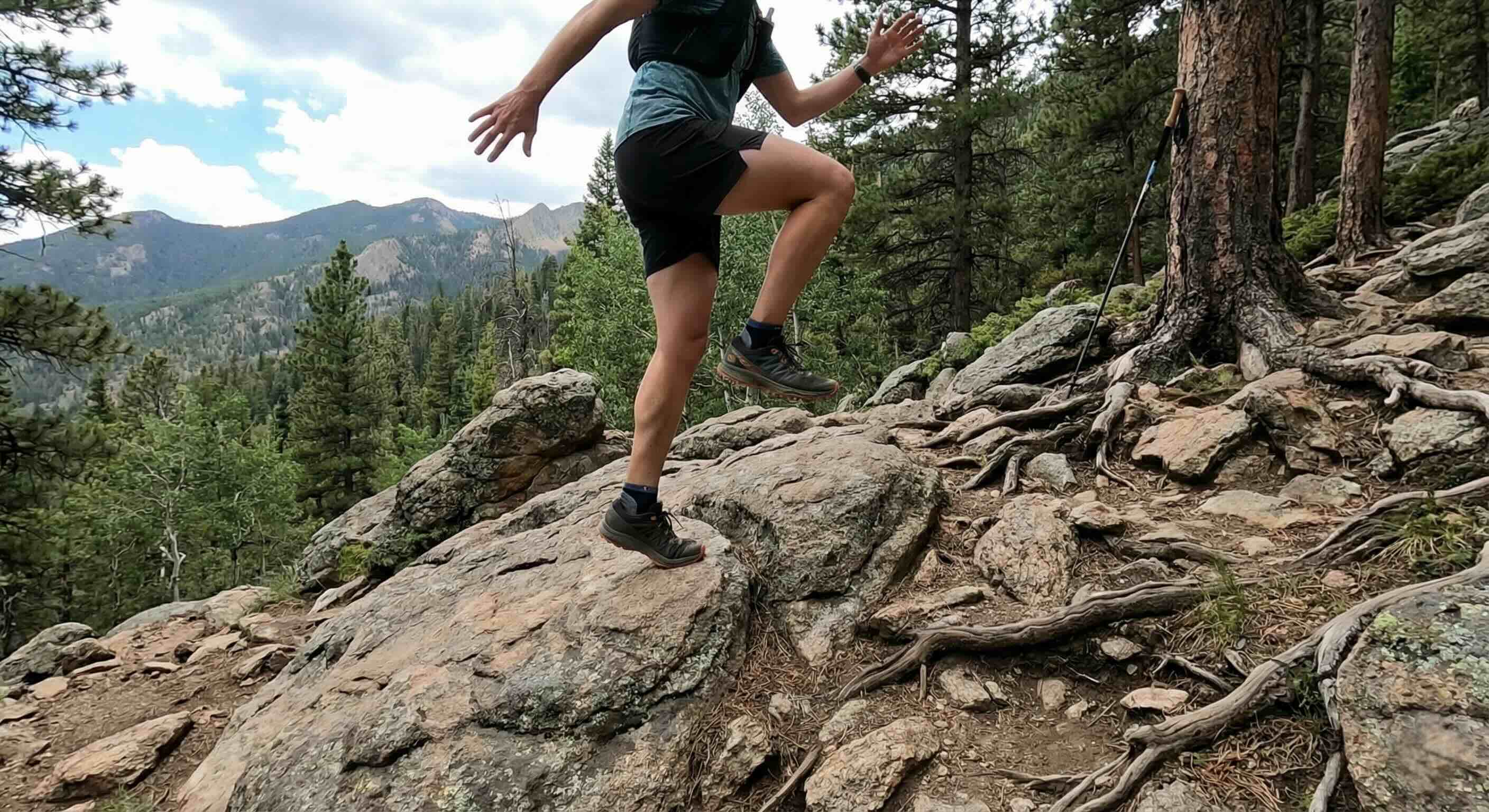
The specific test of mountain endurance. Perform with a pack. Focus on driving through the heel and not pushing off the bottom foot.
Conclusion
Don't abandon the squat, but prioritize the lunge. A hunter with symmetrical single-leg strength is a durable hunter.