
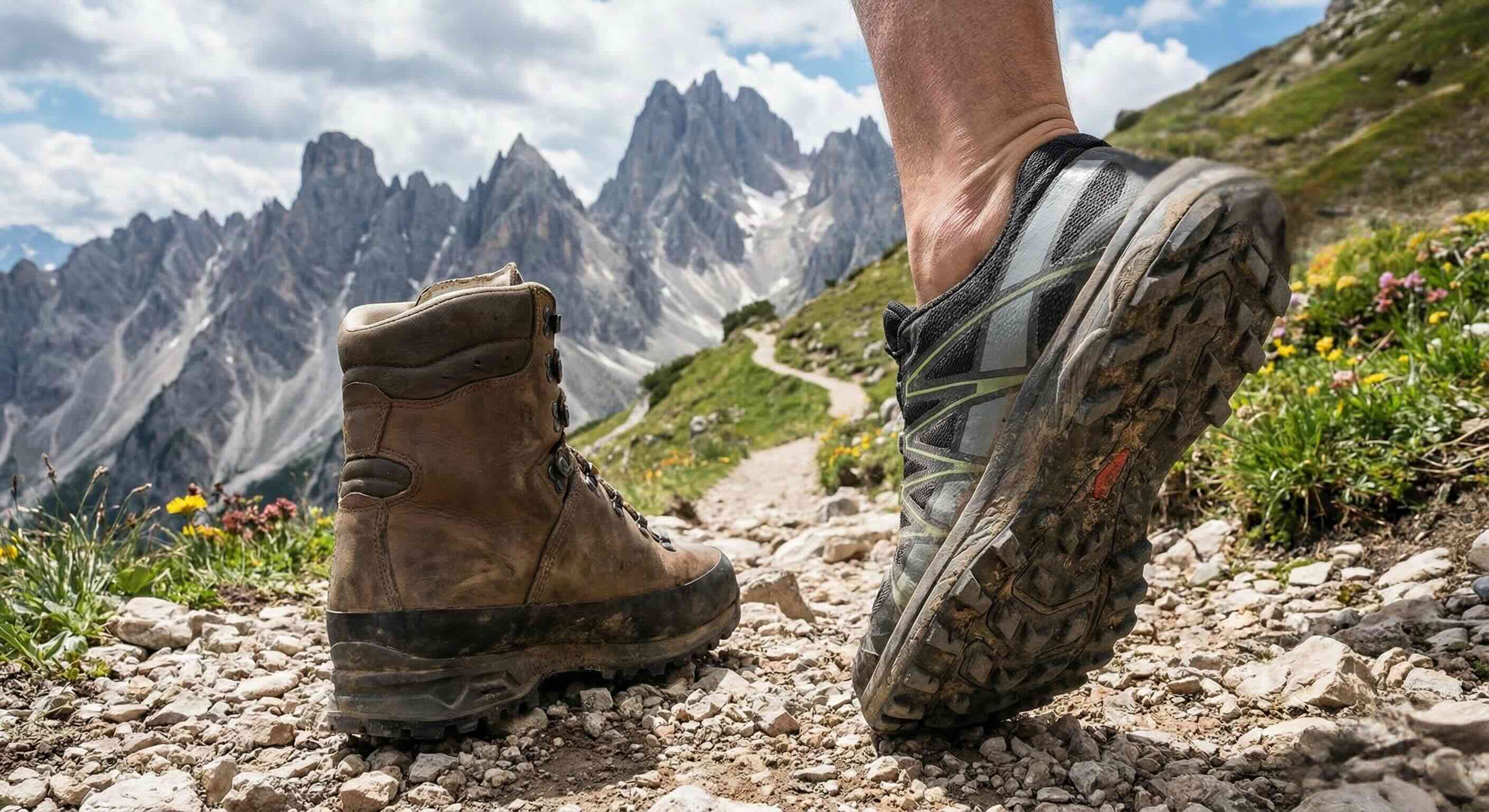
Footwear Selection for Mountain Hunters
Your boots are the only interface between you and the terrain. The "perfect boot" doesn't exist, but the perfect boot for *you and your specific hunt* does. Here is the technical framework for selection.
Stiffness: Torsional Rigidity
Mountain hunting requires distinct lateral stability. When side-hilling on a 30-degree slope with a 60lb pack, a flexible sole will collapse, forcing your ankle tendons (peroneals) to do the work of the boot. This leads to premature fatigue and injury.
- Flexible (Stalking): Best for archery elk in dark timber. Allows you to feel the ground and move silently. Example: Minimalist hikers / trail runners (early season only).
- Stiff (Mountaineering): Required for sheep/goat hunts in shale and scree. The boot acts as a platform, edging into the mountain to create a step where there isn't one.
Ankle Support Height
The debate between 6", 8", and 10" uppers is about leverage and debris, not just "support." A higher upper acts as a brace, reducing the muscular requirement of the calf to stabilize the tibia.
Rule of Thumb: As pack weight increases, boot height should generally increase. A 100lb pack out in low-top shoes is a recipe for a high-ankle sprain unless your proprioception is elite.
Waterproofing vs. Breathability
Gore-Tex keeps water out, but it also keeps sweat in. In early season high-output hunts, a "waterproof" boot often results in wet feet from perspiration, leading to maceration and blisters.
Consider non-waterproof, quick-drying synthetics for August/September hunts where temperatures are high and stream crossings are frequent. Reserve full leather/Gore-Tex for late season snow and cold static glassing.
Fit: The Heel Lock
The most critical fit metric is the heel cup. If your heel lifts more than a few millimeters during steep ascents, friction occurs. Friction + Moisture + Heat = Blisters. Ensure your boot laces allow for a "heel lock” technique to mechanically secure the foot into the rear of the boot.