
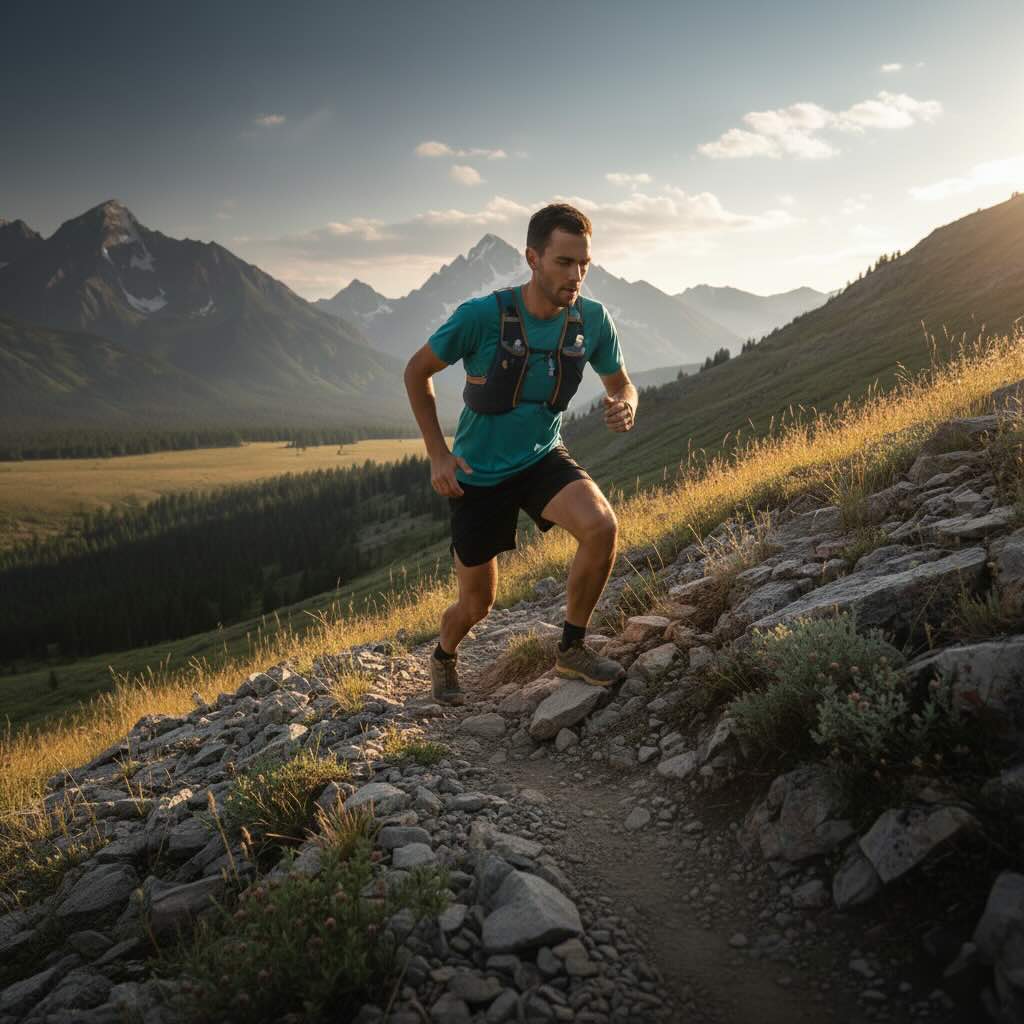
Hip Mobility for Steep Ascents
Climbing a mountain is essentially thousands of high step-ups. If your hips are tight, your lower back has to round to compensate for every single step. This is the root cause of most backcountry back pain.
The "High Step" Mechanic
When you lift your leg to clear a deadfall or step onto a high rock, you need deep hip flexion. If your hip joint hits its end range of motion before your foot lands, your pelvis must tuck under (posterior tilt). This flexes the lumbar spine under load. Do this 5,000 times a day, and your back muscles will spasm to protect the spine.
Hip Flexors: The Brakes
Tight hip flexors (from sitting all day) don't just limit extension; they alter the mechanics of flexion and inhibit the glutes. If you can't open your hips, you can't use your glutes effectively to drive you up the mountain.
Daily Maintenance
1. Couch Stretch
The ultimate undo for sitting. Place your shin against a wall and your knee on the floor. Squeeze your glute to drive the hip forward. 2 minutes per side.
2. Pigeon Pose
Opens the external rotators and glutes. Crucial for being able to squat deeply or step high without twisting.
3. 90/90 Rotation
Actively rotates the femur in the hip socket. Improves internal and external rotation, lubricating the joint capsule.
Conclusion
Mobile hips save spines. Treat mobility not as "stretching," but as "joint preparation" for the load you intend to carry.