
The Backcountry Water Plan
Water is life, but it's also weight. At 2.2 pounds per liter, carrying your entire trip's supply is impossible. You must source it from the land, purify it reliably, and manage your electrolytes to prevent performance crashes.
Filtration Systems
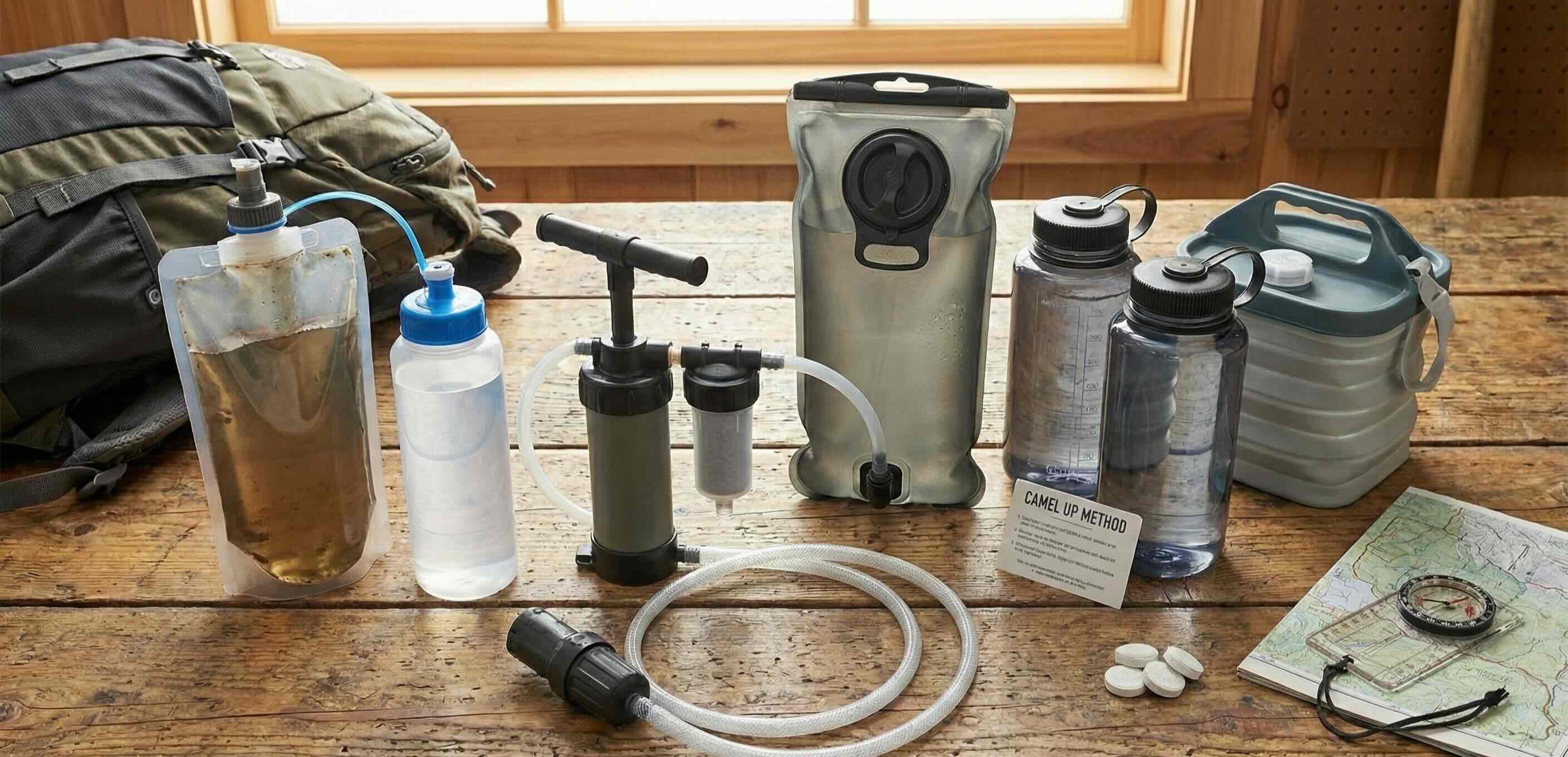
Squeeze vs. Pump vs. Gravity. Pump filters are heavy, slow, and prone to mechanical failure. Minimize moving parts. A simple hollow-fiber membrane squeeze filter (like a Sawyer or Platypus) is the standard. For base camps, a gravity bag system allows you to process 4 liters while you set up your tent.
Critical Warning: Freezing Temperatures
Hollow-fiber filters contain micropores. If water freezes inside these pores, they expand and shatter the filter matrix, rendering it useless (and you won't know until you get sick). If temps drop below freezing, your filter sleeps in your sleeping bag with you. No exceptions.
Capacity Strategy (The "Camel Up")
Do not hike with 4 liters of water unless you are crossing a dry ridge. Instead, "Camel Up" at the source. Drink a full liter right there. Then fill your carrying capacity (usually 2-3 liters) and move. This hydrates you immediately and saves carrying that initial weight on your back.
Dirty vs. Clean Bags
Clearly mark your collection containers. A "dirty" bag gathers stream water. A "clean" bottle receives filtered water. Never mix them. Cross-contamination defeats the purpose. Smartwater bottles are better than Nalgenes—lighter, fit well in side pockets, and thread directly onto most filters.
Backup Purification
Filters clog. Bags burst. Always carry a backup. Chlorine dioxide tablets (not iodine, which tastes awful) weigh nothing and take up zero space. Throw a strip of 10 tablets in your first aid kit. If your main system fails, you still drink.