
The Art of the Ultralight Pack-Out
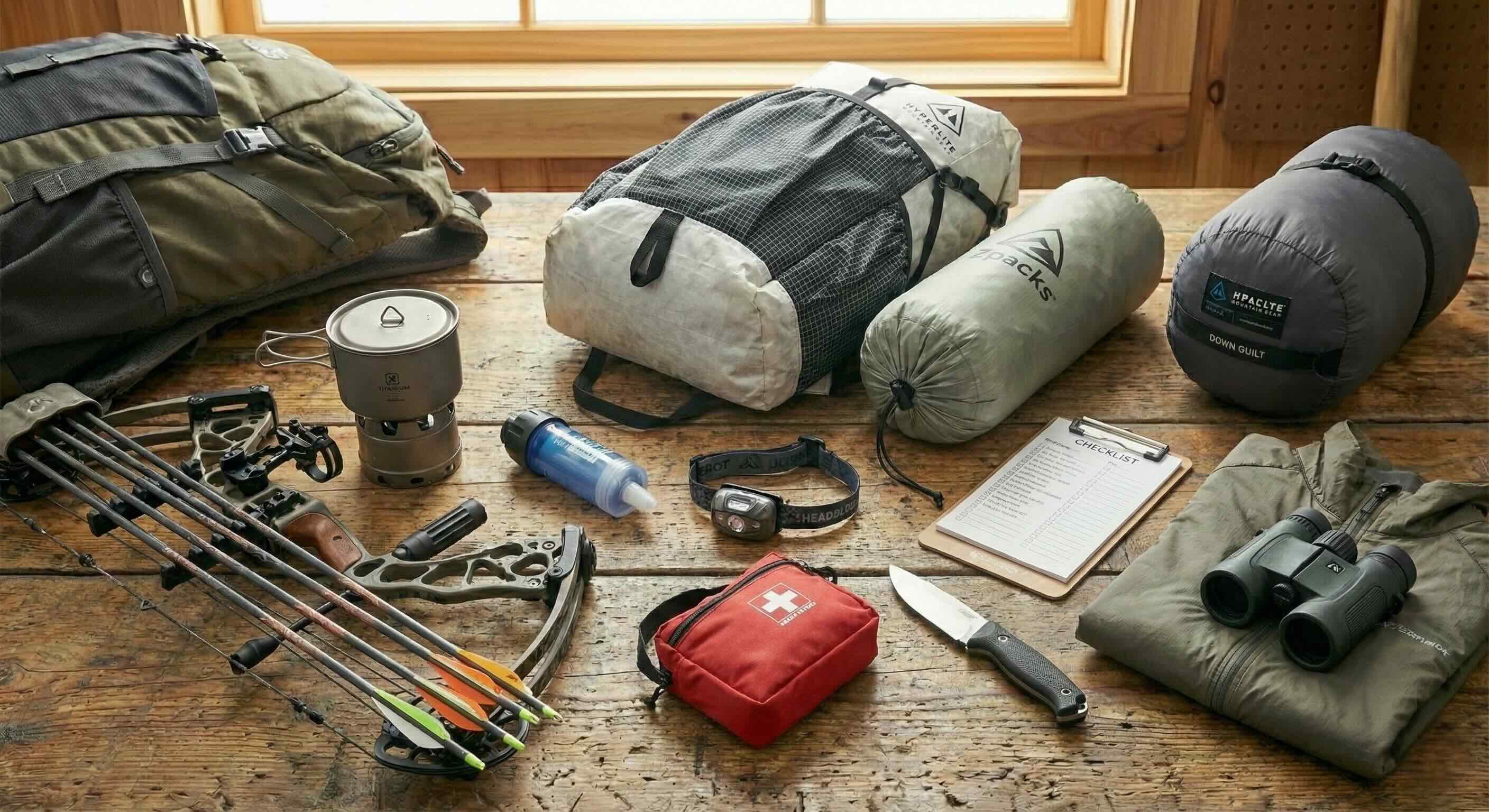
"Ounces equal pounds, and pounds equal pain." It's an old adage, but in the backcountry, it's law. When you are five miles deep with an elk quarter on your back, every ounce you cut from your base weight is energy saved for the physical demand of the pack-out.
The Big Three (Plus One)
To make the biggest impact on your pack weight, you must focus on the heaviest items first. In the hiking world, this is the "Big Three." For hunters, we have a "Big Four."
1. Shelter
Move away from heavy 4-season bomber tents unless you are strictly hunting late-season in severe exposure. A floorless tipi or a high-quality Dyneema trekking pole tent can save you 2-3 lbs instantly. They utilize the poles you are already carrying, eliminating "dead weight."
2. Sleep System
Down is king. Synthetic bags are cheaper and handle moisture better, but treated hydrophobic down offers the best warmth-to-weight ratio. Pair a 15° quilt (which removes the unnecessary bottom material of a sleeping bag) with a high R-value pad for maximum thermal efficiency per ounce.
3. The Pack
This is where hunters differ from hikers. You need a frame capable of hauling 100+ lbs of meat, but the bag itself shouldn't weigh 8 lbs empty. Look for carbon fiber frames or minimalist external frame designs that strip unnecessary pockets and webbing. Aim for a pack roughly 3-5 lbs empty that is rated for heavy loads.
4. The Kill Kit
The often-overlooked weight class. Ditch the heavy bone saw and learn the gutless method. Swap the heavy fixed-blade Buck knife for a Replaceable blade scalpel system (like Havalon or Tyto). Use synthetic, reusable game bags rather than heavy cotton pillowcases. Your entire processing kit should fit in a sandwich bag and weigh less than a pound.
Nutrition & Hydration Efficiency
Water is the heaviest thing you carry (2.2 lbs per liter). Don't carry more than you need to reach the next source.
- Filtration: Ditch the heavy pump filters. Use a squeeze system or tabs.
- Containers: Replace heavy Nalgene bottles with disposable 1L Smartwater bottles. They are lighter, taller (easier to pack), and fit standard filtration threads.
- Food Density: Aim for 125 calories per ounce. If a snack doesn't meet that ratio, it stays at home. Nut butters, olive oil packets, and macadamia nuts are your best friends.
The "Nice to Haves" vs. Essentials
Audit your gear list after every trip. If you didn't use it (except for first aid/emergency gear), don't bring it next time. That extra camp chair? Leave it. The second backup knife? Gone. The heavy battery lantern? Use your headlamp.
Pro Tip: The Spreadsheet of Truth
Buy a kitchen scale. Weigh every single item, including stuff sacks and toothbrushes. Build a spreadsheet or use a tool like LighterPack. You will be shocked to find you are carrying 2 lbs of "organizer bags" that serve no purpose other than organization. Ditch the sacks; stuff the pack.