
Layering Systems for Variable Weather
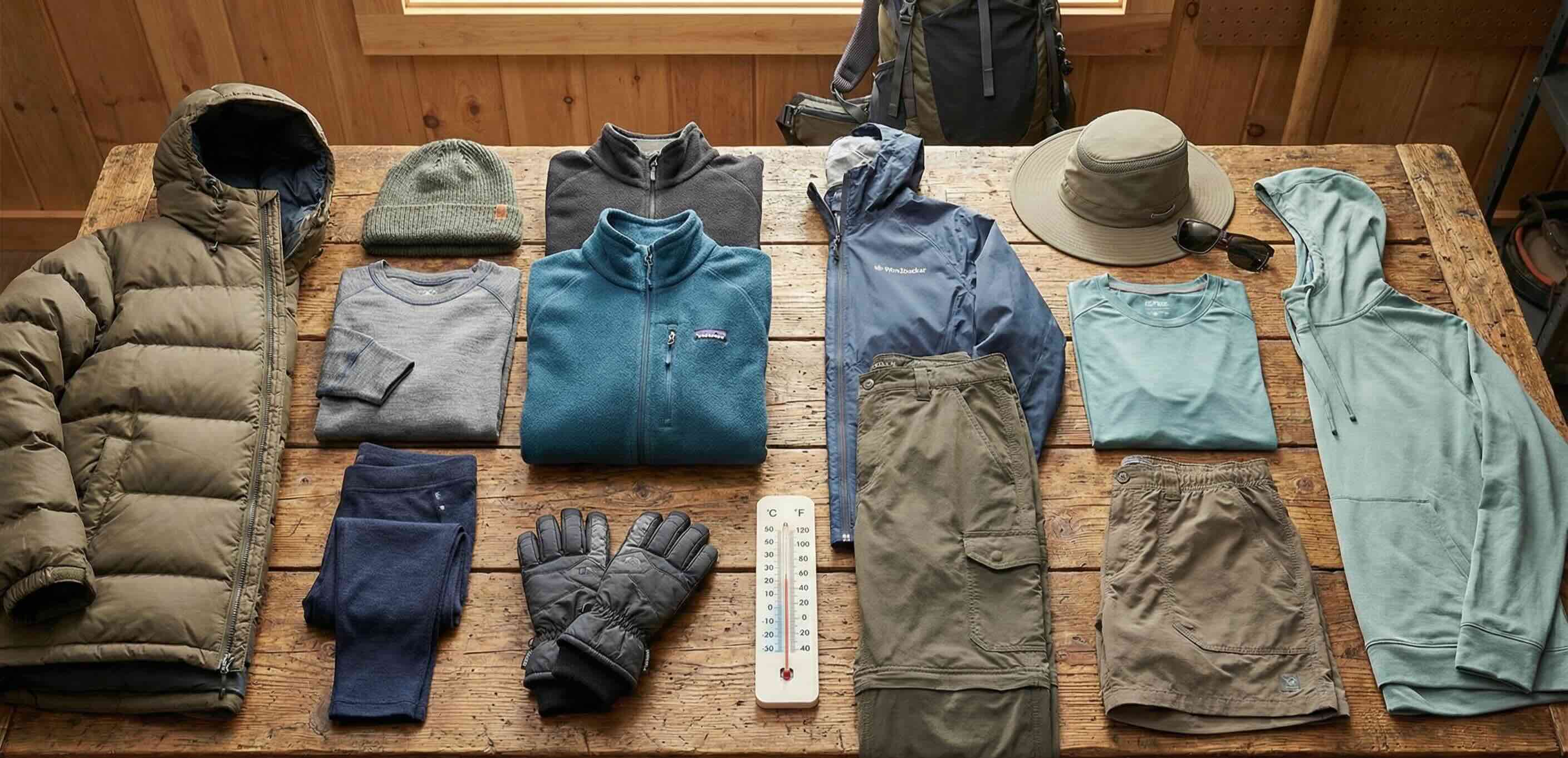
In the high country, "warm" is a moving target. You might be sweating in a t-shirt at noon and shivering in a blizzard by 4 PM. A proper layering system isn't just about clothes; it's a thermostat you adjust on the fly to prevent sweat (which kills) and trap heat (which saves).
1. Base Layer: Moisture Management
Merino Wool vs. Synthetic. Merino naturally fights odor for days (critical for elk hunters playing the wind) and stays warm when wet. Synthetics dry faster but stink within hours. The Rule: Next-to-skin must move sweat AWAY from your body. Cotton is forbidden; cotton kills.
2. Mid-Layer: Active Insulation
This is the layer you hike in when it's cold. It needs to breathe. Fleece logic applies here (grid fleece is king for breathability). Avoid "puffy" down jackets for this layer while moving—you will sweat out from the inside instantly.
3. Static Insulation: The "Puffy"
This lives in your pack until you stop to glass. As soon as you stop moving, this goes on. High-fill power down (850+) offers the best warmth-to-weight ratio. If you hunt wet climates (PNW, Alaska), opt for synthetic insulation which maintains loft when wet.
4. The Shell: Wind & Rain
Most "hunting" softshells are redundant. They are heavy and eventually wet out. A dedicated, lightweight rain shell serves two purposes: blocking wind while glassing (trapping heat in your puffy) and keeping you dry in a squall. Don't hike in it unless you have to; you'll boil.
The "Be Bold, Start Cold" Mantra
When leaving camp in the dark, you should be shivering slightly. If you are warm standing still, you will be sweating ten minutes into the climb. Start cold, hike warm, arrive dry.