
Boot Breakdown: Stiffness & Fit
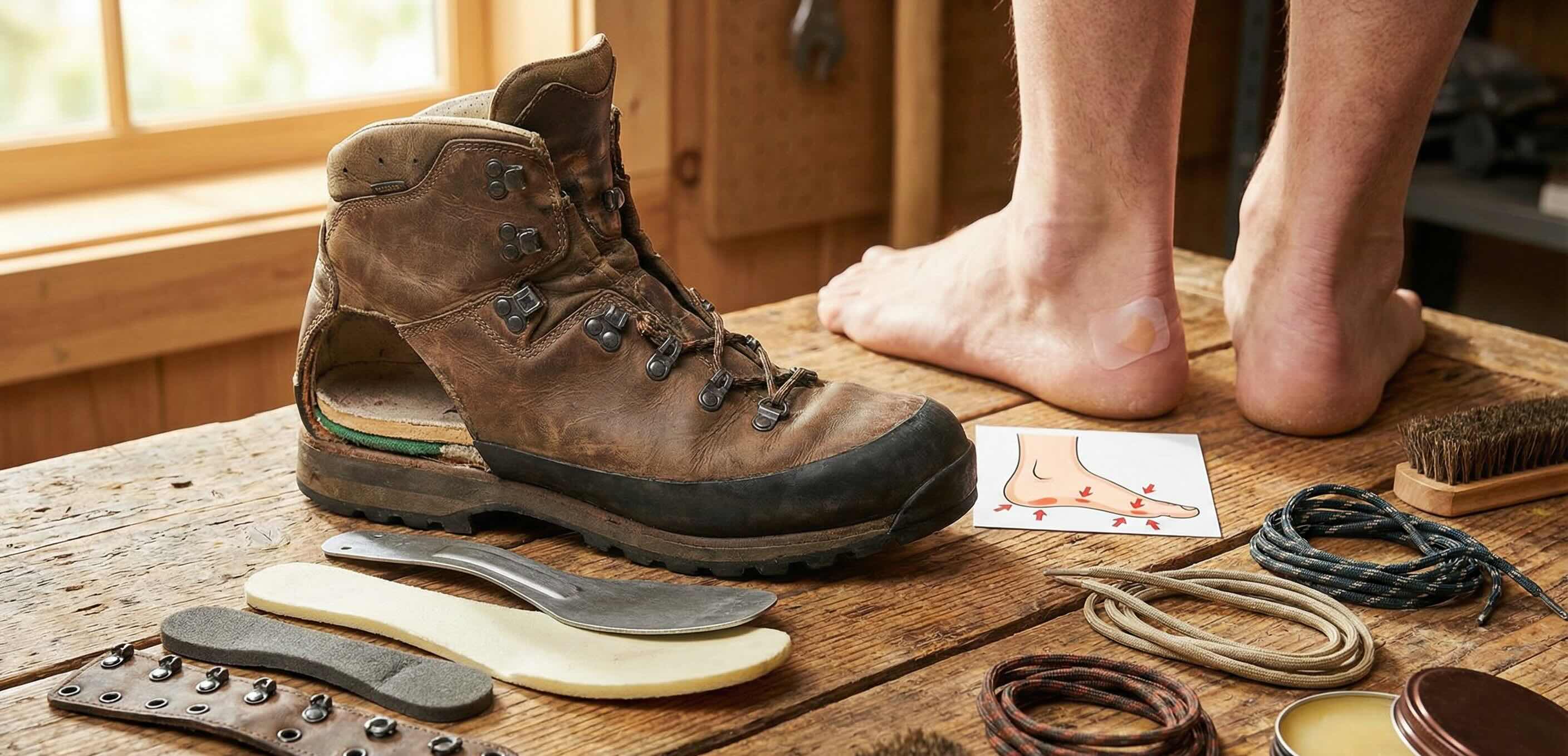
Your boots are the transmission of your hunt. They transfer your energy into the mountain. A sloppy fit or the wrong flex rating will drain your tank faster than a steep grade. Forget brand loyalty—fit is everything.
Understanding Flex Ratings
Hunting boots are often categorized by stiffness on a scale of 1 (flexible) to 5 (rigid). Choosing the right one depends on your terrain and load.
Flex 2-3: The Early Season Hybrid
Best for archery elk or mule deer in moderate terrain. These feel like a stiff hiker. They allow for quiet stalking (you can feel the ground) but offer enough support for a 60lb pack. However, under a 100lb heavy pack-out, your calves will do extra work stabilizing the load.
Flex 4-5: The Goat & Sheep Class
Required for steep, shale-covered slopes. A rigid sole acts as a platform, biting into the sidehill so your foot stays flat while the terrain is angled. They are louder and clunky on flat ground, but irreplaceable in the cliffs.
The "Heel Lock" Myth
If your heel slips, you will blister. No amount of "break-in" fixes a volume issue. When trying on boots, do not just walk around the store. Put a 50lb sandbag in a pack and walk up and down stairs. If your heel lifts more than a quarter-inch, the boot volume is too high for your foot.
Lacing Strategies
Pro Tip: The Surgeon's Knot
Learn to isolate tension. If your toes feel crushed on the descent, use a surgeon's knot (a double overhand wrap) at the ankle breakpoint. This locks the heel back without overtightening the forefoot.
Socks: The Liner System
Friction causes blisters. By wearing a thin, synthetic liner sock under your heavy merino wool sock, you transfer that friction to the layers between the socks, rather than between the sock and your skin. This simple $15 upgrade saves more hunts than $500 boots.